HVAC Contractor Tax Deductions:
The Complete 2026 Guide
Most HVAC contractors overpay taxes because their CPA doesn't understand refrigerant costs, EPA 608 licensing, or seasonal income swings. This guide covers every legal write-off, including the three things HVAC contractors miss most.
HVAC Tax Deductions in 2026
- Tools and equipment (Section 179 full expensing available)
- Refrigerant & Materials (cash method deduction)
- Work vehicle: standard mileage (72.5¢/mile through June, 76¢/mile from July) or actual expense method
- Home office, if you do admin work in a dedicated space
- EPA 608 & Licensing
- Liability insurance, tool insurance, and self-employed health insurance
- Retirement contributions via SEP-IRA up to $72,000 (most miss this)
- Phone (business-use %) and job management software
Deductions by Category
Tools & Diagnostic EquipmentCan I write off the full cost this year?
You're probably wondering: "Do I have to spread this over years or can I take it all now?" Good news, you can take it all now. The IRS has a rule called Section 179 that lets you deduct the full purchase price of tools in the year you bought them.
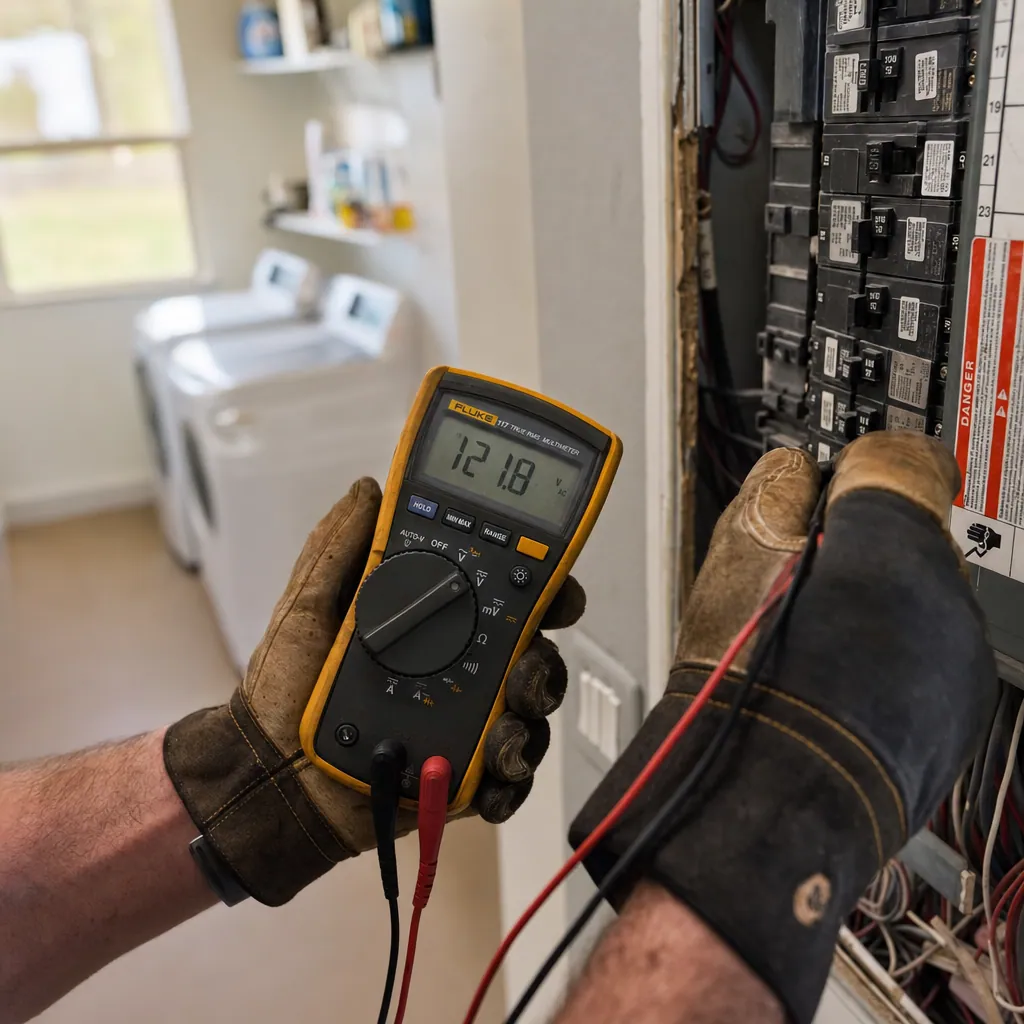
What counts? Manifold gauge sets, vacuum pumps, refrigerant recovery machines, micron gauges, combustion analyzers, HVAC multimeters, and standard hand tools. If you use it for work, it belongs on your return.
What do I actually need to keep? Your receipt and a quick note about what the tool is for. That is it. Nothing complicated.
Refrigerant & MaterialsWhat can I write off for materials I buy for jobs?
You're probably thinking: "I spend a ton on refrigerant and parts. Where does that go?" Materials you buy for specific jobs—R-410A, R-22, refrigerant recovery cylinders, copper line sets, sheet metal, filters, capacitors—are all deductible. Under the cash method, you deduct them in the year you paid for them.
What about stuff I keep in my truck as inventory? Only what you actually used this year is deductible. If you bought multiple cylinders of R-410A and half is still in your truck, you generally cannot write off the unused portion this year if you keep inventory.
What about my work clothes? Yes, if they are clothes you would not wear off the job. Specialized HVAC gear qualifies. A polo shirt with a logo that you could wear to a baseball game probably does not.
Vehicle DeductionsWhat's the best way to deduct my work van?
You're probably wondering: "Which method saves me the most?" It depends on your van. Simple method: standard mileage, 72.5 cents per mile through June 30, 2026, then 76 cents for the rest of the year. Track and multiply. But if your van is a full-size vehicle over 6,000 lbs, the actual expense method almost always wins.
What does "actual expense" mean? You add up everything it costs to run the HVAC van—gas, oil, tires, insurance, repairs, registration—and deduct the percentage you used it for work. Plus, in the year you buy a new heavy van, you can write off a massive chunk of its value upfront with bonus depreciation.
Do I really need to track every mile? Yes, both methods require a mileage log. The good news is it takes about 10 seconds per trip with a free app. A shoebox of gas receipts will not hold up if the IRS ever asks questions.
Home OfficeDo I qualify if I don't have a real "office"?
You're probably thinking: "I don't have a fancy office, just a desk where I do paperwork." That might be enough. You need a space you use regularly and exclusively for work—scheduling jobs, writing proposals, sending invoices, or taking client calls.
What does "exclusively" actually mean? It means that space cannot double as something else. The kitchen table where the family eats does not count. But a corner of the spare room you have set up as your work area qualifies.
How do I figure out what I can deduct? Math way: figure out what percentage of your home's square footage that space is, then deduct that same percentage of your rent/mortgage, utilities, and insurance. Easy way: multiply the workspace square footage by $5, up to $1,500.
EPA 608 & LicensingAre my license renewals and certs deductible?
You're probably wondering: "Is this actually deductible or just a cost of doing business?" Both, and because it is a cost of doing business, it is deductible. Every fee you pay to stay licensed goes on Schedule C. Your EPA 608 certification renewal, state HVAC contractor license, NATE certification, AHRI credentials, and OSHA 10/30 are all fully deductible.
What about classes I take? If the course is required to maintain your current license or keeps you current in your trade, it is deductible.
Insurance PremiumsCan I deduct my health insurance and business coverage?
You're probably thinking: "I pay a ton for insurance. Is any of that coming back?" Yes, and it adds up. All your business insurance is deductible: general liability, refrigerant pollution liability, commercial auto, and workers' comp.
Can I deduct my health insurance premiums? If you qualify, the self-employed health insurance deduction can reduce your income tax. Report eligible premiums on Schedule 1 (Form 1040). This deduction does not reduce net earnings for self-employment tax. Check the eligibility and earned-income limits in the IRS Form 7206 instructions.
Where does it go on the return? Keep this deduction separate from business insurance on Schedule C. Your eligibility and deduction amount depend on the Form 7206 rules.
Retirement ContributionsIs there a way to lower my tax bill AND save for retirement?
You're probably wondering: "Is there anything I can do before April to lower what I owe?" Yes, and this is the most underused deduction for self-employed HVAC contractors clearing $80K+. A SEP-IRA lets you contribute up to 25% of your net self-employment income, maxing out at $72,000.
What is the actual dollar impact? If you earned $100K this year and put $20K into a SEP-IRA, you just moved $20K off your taxable income. At a 35% combined rate, that is roughly $7,000 in taxes you do not pay this year.
Is a Solo 401(k) better? It can be if you want to save more. A Solo 401(k) lets you contribute as both employee ($24,500) and employer (up to 25% of pay), with the same $72,000 combined limit.
Phone & SoftwareCan I deduct my phone and the apps I use for work?
You're probably thinking: "My phone is basically a work tool. Can I write it off?" Yes, the business-use percentage of your monthly bill and the phone itself are both deductible. Most HVAC techs use their phone heavily for work, scheduling jobs, dispatching, and checking email. That percentage of your bill is a deduction.
What about apps and software I pay for? Fully deductible: ServiceTitan, Jobber, Housecall Pro, GPS tracking, and dispatching software. If you pay for it because of your business, it is a write-off.
What about my home internet? If you have a home office, the business-use portion of your home internet is deductible as well.
What Most HVAC Contractors Miss
Quarterly Estimated Tax for HVAC Contractors
Use IRS Form 1040-ES to work out estimated payments for your situation. Our quarterly taxes guide explains the payment dates and safe-harbor rules.
| Income Period | Payment Due | Quarter |
|---|---|---|
| Q1: Jan 1 to Mar 31 | April 15, 2026 | Full quarter |
| Q2: Apr 1 to May 31 | June 15, 2026 | Short quarter |
| Q3: Jun 1 to Aug 31 | September 15, 2026 | Full quarter |
| Q4: Sep 1 to Dec 31 | January 15, 2027 | Full quarter |
Earning $75K+ Net? There's a Strategy Worth Knowing.
Once your HVAC business is clearing $75,000 or more in net profit, there's a legal structure change that can put a significant chunk of money back in your pocket. It's called an S-Corp election, and it works by changing how your income is classified, reducing the portion subject to self-employment tax. Here's what the difference looks like on $100K:
My refrigerant costs are massive. Are those deductible?
Yes. R-410A, R-22, and other refrigerants are fully deductible as supplies in the year you purchase them. You don't have to depreciate them or treat them as long-term capital equipment. As long as you paid for it this year, you deduct it this year.
I carry R-410A and other refrigerants in my van. How do I track that for taxes?
Keep receipts for every cylinder you buy and track the cost. If you use the cash method of accounting (like most small contractors), you deduct the cost of the materials and supplies in the year you pay for them, regardless of whether they are sitting in your van or have been installed in a customer's system.
I run both residential and commercial HVAC. Does that change anything on my return?
It doesn't change where your deductions go—they still go on Schedule C—but it might change how you track jobs. Commercial jobs often have longer billing cycles and retainage. Just make sure you are consistent with your accounting method (cash vs. accrual) and are tracking expenses properly for each side of the business.
My van has $40K in equipment and tools. Can I write all that off this year?
Yes, thanks to Section 179. You can elect to deduct the entire cost of qualifying equipment and tools in the year you put them into service, rather than depreciating them over several years. This includes vacuum pumps, recovery machines, and diagnostic gear.
What's the deal with self-employment tax? Nobody warned me about it when I went independent.
Self-employment tax covers Social Security and Medicare. The standard rate is 15.3%, generally figured on 92.35% of net business profit. The Social Security wage base and Additional Medicare Tax can change the calculation. This tax is separate from income tax. You can generally deduct half of your self-employment tax when figuring adjusted gross income. Our self-employment tax guide explains the calculation.
Should I stay an LLC or is an S-Corp actually worth it for HVAC?
If you are consistently netting over $75,000 to $80,000, an S-Corp is usually worth it. It allows you to split your profits between a "reasonable salary" (subject to SE tax) and "distributions" (not subject to SE tax), potentially saving you thousands a year.
My EPA 608 renewal and NATE cert cost me hundreds. Are those write-offs?
Absolutely. All fees associated with maintaining your professional licenses and certifications, including EPA 608, state HVAC licenses, and NATE certifications, are 100% deductible as business expenses.
How do I handle the income swings? Summer is huge, January is dead.
Use IRS Form 1040-ES to work out estimated payments for your situation. Our quarterly taxes guide explains the payment dates and safe-harbor rules.
Want Us to Find Every Deduction for Your HVAC Business?
We specialize in HVAC contractor taxes. Free 30-minute call. We'll review your situation and tell you exactly what we'd do differently.